
Torsion vs Extension Springs: Which Do You Have?
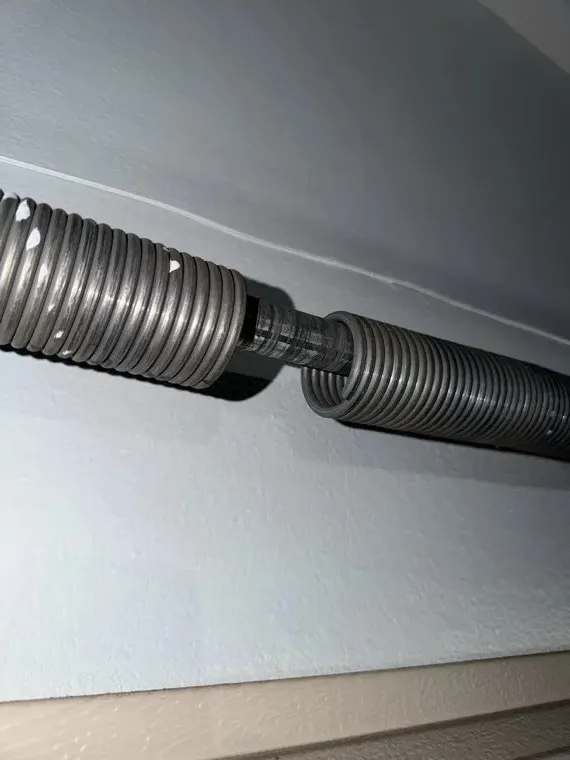
Look above the door: a spring coiled on a steel shaft means torsion; long springs stretched along the side tracks mean extension. Not sure? We identify it free on-site, with a Guaranteed ETA of up to 60 minutes anywhere in Orange County.
- ★ 4.9 on Google Reviews
- Guaranteed ETA — Up to 60 Minutes
- Same-Day Service
- Free Estimates
Torsion vs Extension Springs at a Glance
Nearly every door built in the last 30 years lifts on one of two spring systems, and the difference shapes everything that follows — how the door feels, how long the parts last and what a repair costs. Here is the short version before we get into identification, lifespan and pricing.
| Torsion Springs | Extension Springs | |
|---|---|---|
| Where they mount | On a steel shaft directly above the door opening | Along the horizontal tracks, one on each side |
| Doors they suit | Most modern doors, including heavy two-car and insulated doors | Mostly lighter single-car doors and older builds |
| How they fail | Usually stay contained on the shaft when they snap | Stretch under load — a snapped spring or cable can whip |
| Rated lifespan | About 10,000 cycles builder-grade; 25,000 high-cycle | Similar 10,000-cycle ratings, replaced as a pair |
| Market replacement range | $389 and up on most two-car doors | $150–$250 per pair |
How Can You Tell Which Spring System Your Door Has?
Still unsure? Text us a photo of the area above your closed door and a technician will tell you which system it is — and what a like-for-like spring replacement runs in your city — before you commit to anything.
- ✓Look above the door — a long steel shaft spanning the opening with one or two coils around it means torsion
- ✓Check the side tracks — skinny springs stretched parallel to the horizontal tracks mean an extension system
- ✓Count the springs — one centered torsion spring is common on single-car doors; two on the shaft is standard for two-car doors
- ✓Find the center plate — a fixed bearing plate above the opening is another torsion giveaway
- ✓Read the door itself — lightweight, non-insulated doors from the 1980s–90s lean extension; modern insulated doors almost always run torsion
Which Spring System Lasts Longer?
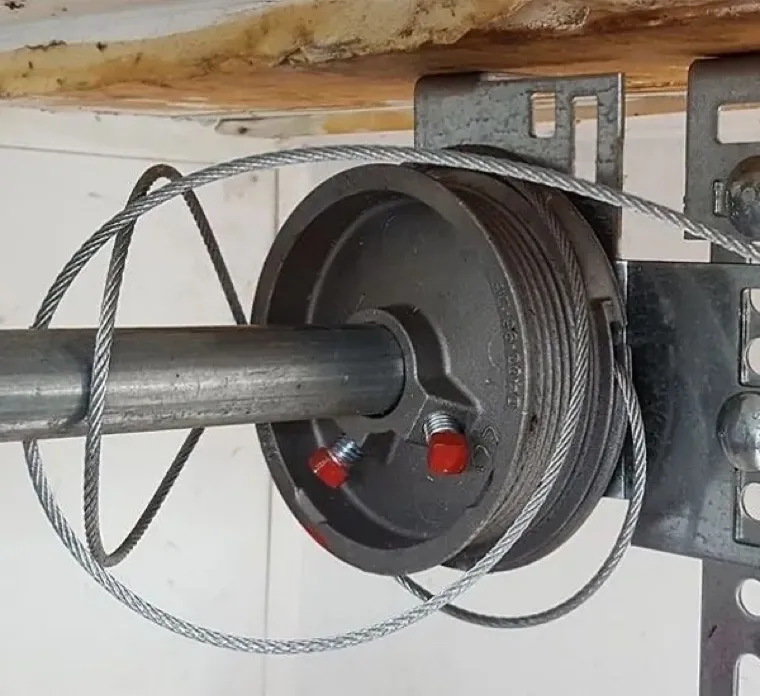
Torsion systems hold one structural advantage: fewer moving parts in the failure path, with cables wound neatly on drums instead of stretched across the garage. When an extension system lets go, it often takes cables and pulleys with it — more parts, more labor and a messier repair visit.
- ✓Cycle rating — wire size and steel quality, not branding, set the number
- ✓Door balance — an unbalanced door forces springs to work unevenly and fail early
- ✓Coastal air — salt-air corrosion shortens spring life noticeably in beachside cities
- ✓Preventive care — an annual tune-up catches fraying cables and worn drums before they take the springs down with them
Is the High-Cycle Spring Upgrade Worth It?
When we replace springs, our standard is a high-cycle spring rated around 25,000 cycles — roughly two to three times the life of the builder-grade part it replaces. The upgrade adds a modest amount to the job, and on a per-year basis it usually works out cheaper because the second service call disappears from your calendar.
The honest math: if a standard spring lasts seven years and a high-cycle spring lasts twice that, you skip one full repair cycle — the downtime, the noise, and the risk of it failing on a Saturday night. We price the upgrade inside the flat quote, never as a surprise line item at the end.
What Does Spring Replacement Cost in Orange County?
As market ranges — real quotes vary with door size, weight and spring type — most Orange County homeowners pay roughly $389 and up for torsion springs on a standard two-car door, and $150–$250 for an extension spring pair. Heavy custom doors, high-cycle upgrades and hard-to-reach hardware run higher. Every job we price is flat-rate: the technician measures the door, shows you the failed parts and quotes one number before any work starts.
| Spring Job | Typical Market Range | What Moves the Price |
|---|---|---|
| Torsion spring replacement | $389+ (most two-car doors) | Door weight, single vs. paired springs, cycle rating |
| Extension spring replacement | $150–$250 per pair | Cable and pulley condition, safety-containment cable |
| High-cycle torsion upgrade | Modest premium over standard torsion | Rated around 25,000 cycles — quoted upfront in the flat price |
Spring Safety: Why This Is Never a DIY Job
A garage door weighs 150–300 pounds, and its springs hold nearly all of that weight in tension at all times. A torsion spring stores enough energy to cause serious injury when it releases uncontrolled, and hardware-store winding bars are no substitute for trained hands. Every year, do-it-yourself spring work turns a routine repair into a damaged door, a bent shaft or a trip to the emergency room.
If a spring breaks, keep the door closed, keep everyone clear and call a licensed garage door repair team. Don't run the opener to force the door — that strips gears and turns a spring job into an opener repair — and never pull the release cord with the door raised. With a Guaranteed ETA of up to 60 minutes, we can usually secure the door and finish the repair in a single visit.
More Garage Door Buying Guides
Comparison shopping doesn't stop at springs — these guides pair well with what you just read:
Related Garage Door & Gate Services
Torsion vs Extension Spring FAQs
Neither has a built-in advantage — builder-grade springs of both types are rated around 10,000 cycles. What matters is the cycle rating you buy, door balance and coastal corrosion. We install high-cycle springs rated near 25,000 cycles as standard, which typically doubles to triples the service life of the original parts.
Close the door and look up: one or two coils on a steel shaft above the opening means torsion, while long springs stretched along the side tracks mean extension. Two-car and insulated doors are almost always torsion. Send us a photo and we'll identify your system free before quoting anything.
Market ranges for Orange County run about $389 and up for torsion springs on a standard two-car door and $150–$250 for an extension pair, with high-cycle upgrades adding a modest premium. We quote flat-rate after a free on-site measurement, so the number you approve is the number you pay.
In most homes, yes. High-cycle springs are rated around 25,000 cycles — roughly two to three times a builder-grade spring — and the upgrade usually costs less over the door's life than paying for a second replacement visit. On rentals and busy two-car households the math is even clearer.
Technically sometimes, practically no. The door weighs its full 150–300 pounds, and running the opener strains the motor or strips the gear. Pulling the release cord on a raised door can let it free-fall. Keep it closed and call us — with a Guaranteed ETA of up to 60 minutes, help arrives fast.
When a door carries two springs and one fails, we replace both. They've logged identical cycles and fatigue, so the survivor usually follows within months. Matched pairs also let us balance the door precisely, so the opener only does a small share of the lifting and the whole system lasts longer.
Garage Door or Gate Trouble? We're On Our Way.
Open 24 hours · Free estimates · Guaranteed ETA of up to 60 minutes, anywhere in Orange County.